
What's new


About the Game
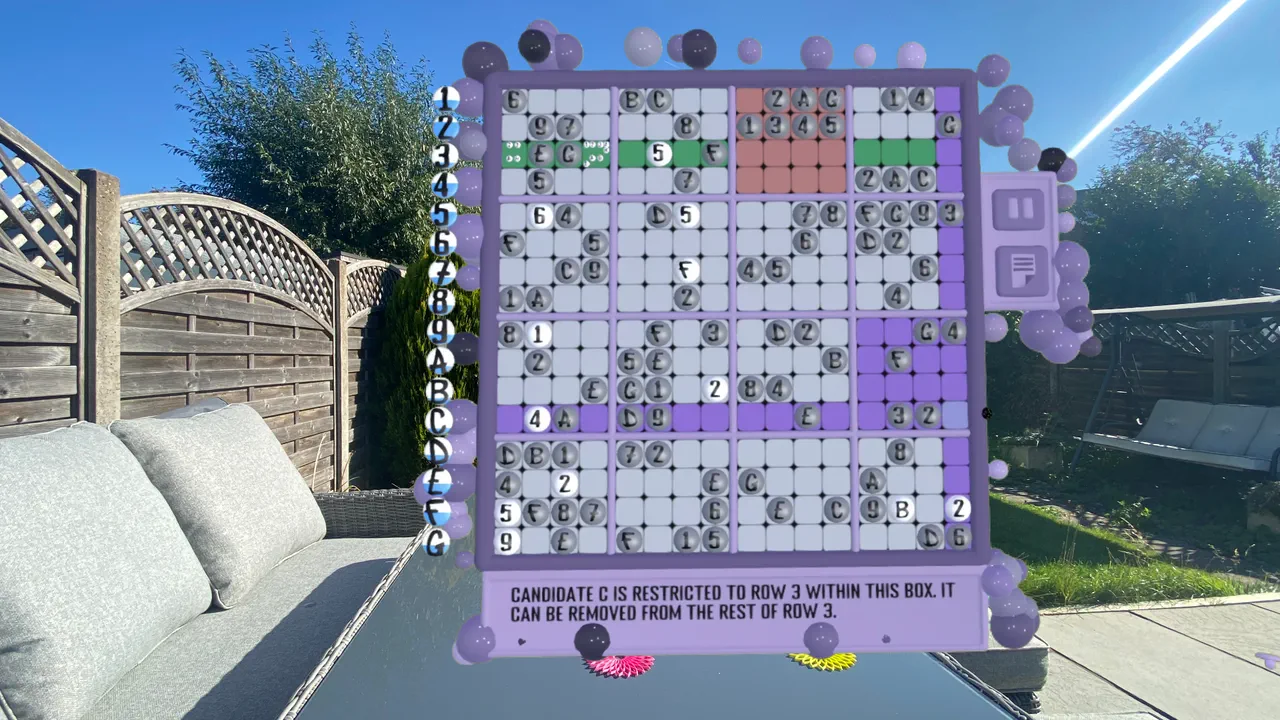
Augmental Puzzles is a comfort-first VR puzzle game: a calm, focused place to solve handcrafted logic puzzles at your own pace. Sit back, drop a puzzle on the ceiling in passthrough, breathe, and think.
It launched with the timeless challenge of Sudoku and is growing: Nonograms arrived in June, and Minesweeper, rebuilt for pure deduction, is the third mode, with more to come. No motion sickness, no pressure, no twitch reflexes, just the quiet joy of problem-solving. It's designed to be played seated, in mixed reality, for as long as you like.
We're a small, independent, self-funded studio shipping in Early Access and updating in the open, with a monthly cadence of new puzzles, features and fixes driven directly by player feedback.
“Most VR is played sitting down. We build for that: calm, comfortable puzzles you can sink an hour into without breaking a sweat.”
Nonograms: Picture Crosswords
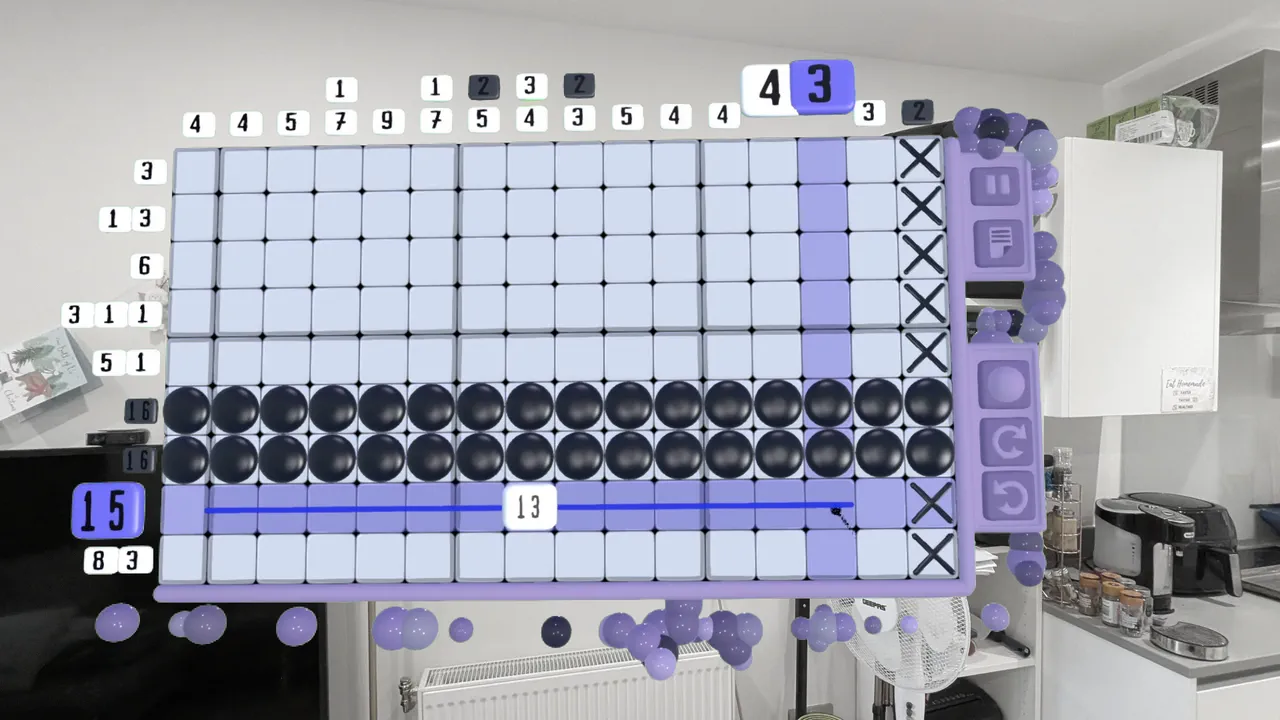
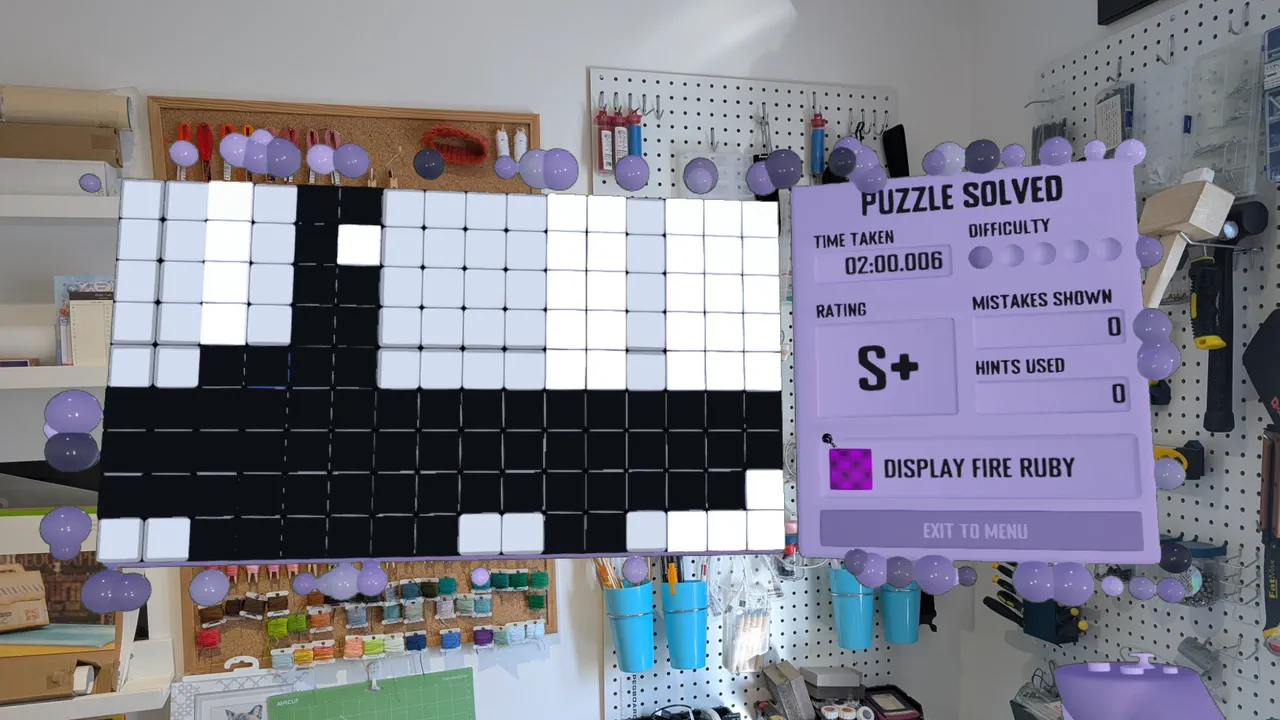
Nonograms (also known as picture crosswords) are grid puzzles where number clues along each row and column tell you which cells to fill in. Solve the logic and a hidden picture emerges. They're the same pure deductive joy as Sudoku, with a satisfying visual payoff at the end.
This was a big moment for us: our first new puzzle mode beyond Sudoku, and proof of where the game is heading. Nonograms plays beautifully with standard Quest controllers and shines with the Logitech MX Ink stylus, where filling and marking cells feels natural in the hand.
Minesweeper: Rebuilt for Pure Deduction
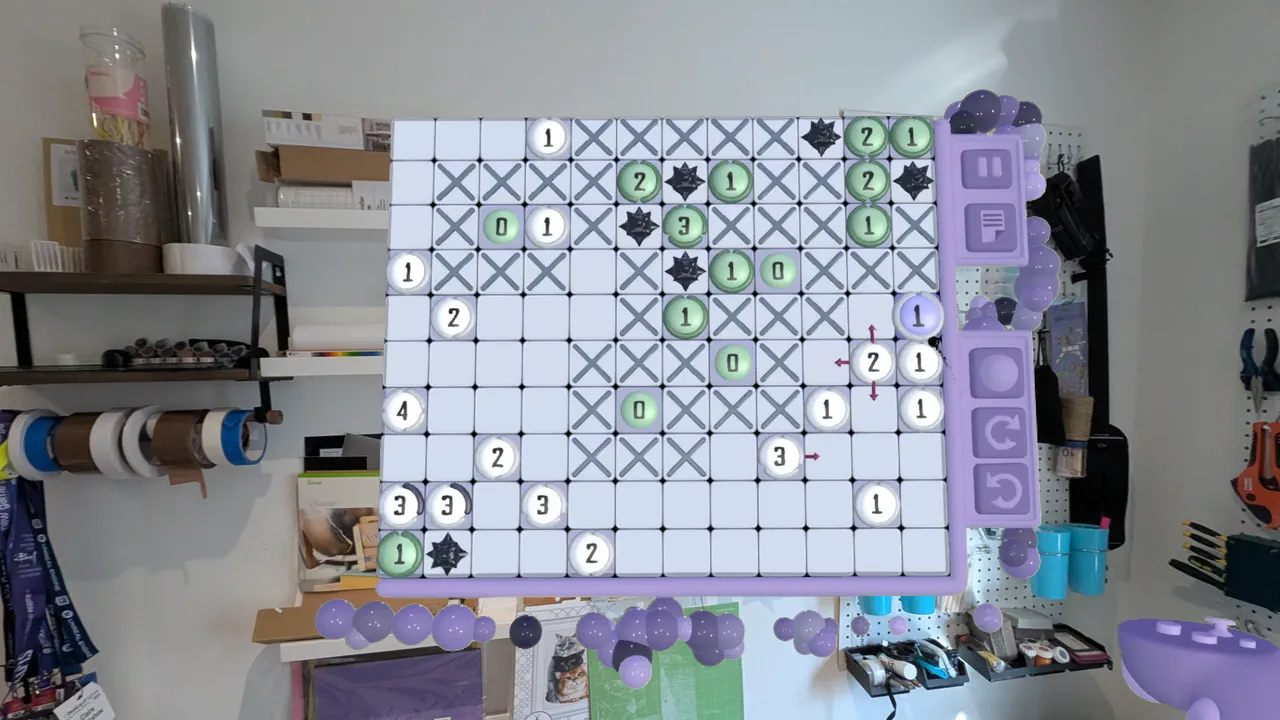
Our third mode is Minesweeper with the guessing taken out. Every clue is on the board from the start, so there is no fog of war and no lucky click: the whole field is one logic problem you can see at once, and you mark each cell as a mine or as safe using nothing but the numbers. Every board is set by hand and verified by our solver to be solvable by deduction alone.
It ships with boards from a friendly 8x8 up to a 50x50, ghost marks for working, hints that name the technique they are using, a six-board rung in the free Welcome Pack and a 101-board Minesweeper Bundle. Full details in the Minesweeper Update notes.
Features
- Three Puzzle Modes: Classic Sudoku from 6x6 to 16x16, Nonograms (picture crosswords), and Minesweeper rebuilt for pure deduction with every clue visible from the start.
- Handcrafted Puzzles: Every puzzle is set by hand and computer-verified for a single, fair, logical solution. “Sourdough-ku”, if you will: quality made for logic, not guessing.
- A Puzzle AI That Teaches: We built our own constraint-solving puzzle engine, a small, old-school game AI that reasons the way a person does. A trimmed-down version ships inside the game to power Smart Hints that don't just unstick you, but explain why the next move is right, teaching real technique as you play.
- Comfort First: Designed for seated play and mixed reality. Keep passthrough on to stay aware of your room, or switch into a calming bubble. Rock-solid frame rates so long sessions stay comfortable.
- Logitech MX Ink Support: Pick up the stylus and the game knows: the controller swaps for a pen with tip pressure and an eraser. Put it down and your Quest controllers take back over. No menus, no fuss.
- Scratchpad: Need more room to think? Doodle candidates and chains freely; your working saves with each puzzle.
- Infinite Undo & Replay: Undo to your heart's content, or watch a replay of your solve. Mistakes are just part of the process.
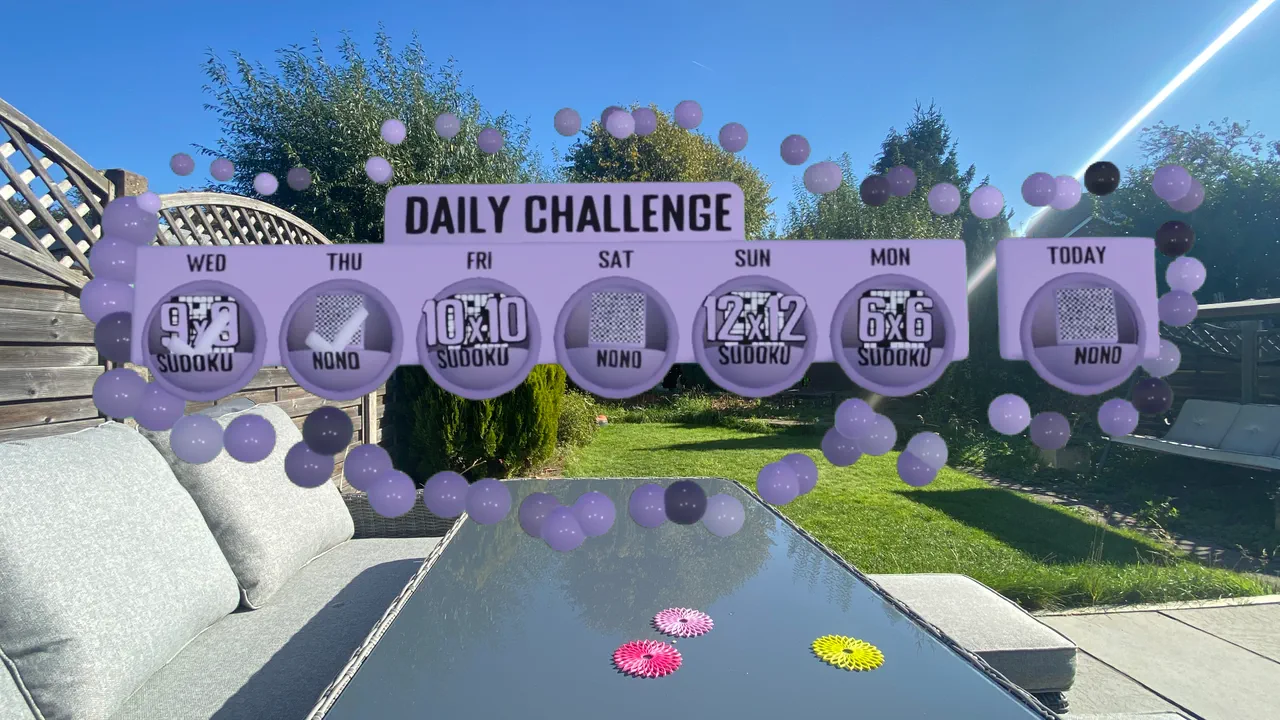
- Daily Challenges & Leaderboards: A fresh puzzle drops every day; track your progress and personal bests.
- In-Game Feedback: Point at your headset and pull the trigger to send us a screenshot and a mood. It's the channel that shapes every update.
- Cloud Save: Your puzzles follow you across devices.
Why We Made It
Why Sudoku?
Two reasons: a pen and a love of puzzles. Our Technical Director helped give feedback on the Logitech MX Ink stylus while at Adobe, and when it neared release she brought it into Godot to build a quick drawing test. Then she turned around and thought, “hang on, I want to play Sudoku,” went looking on the VR stores… and there wasn't one.
We love logic puzzles and wanted a hyper-polished one we'd actually play every day, in a headset, not on a phone. We started with the core puzzle modes, no gimmicks, held to one golden rule: does it make for comfortable, satisfying solving, and will we still enjoy it the fiftieth time we see it? (We still log in and solve a few every day.)
“Sudoku isn't maths. It's logic you can feel: swap every number for a colour and it's exactly the same puzzle. Too many people are handed the rules and thrown to the wolves; we teach you to actually play.”
Why comfort-first VR?
Because there aren't enough calm games in VR. The data is clear: most VR playtime is seated. People want to put a headset on without committing to a sweaty workout in a big play space, and VR still has more friction getting in and out than picking up a phone. A relaxed game you can pause to reach for a snack, played in mixed reality from a bean bag, keeps people in far longer.
It works: thanks to our comfort focus we're seeing playtimes well above the industry average, especially among mixed-reality players. The numbers we care about most aren't downloads, they're puzzles solved and time spent in headset.
Why Godot?
We're early adopters who wanted our hands in the engine. Rather than building a car from scratch, or taking the F1 car that is Unreal and bending it to our will, we took an engine we could gut, rewire and own. Godot had us running on day one across a range of hardware, and its OpenXR support is genuinely stellar: adding a new headset or a weird peripheral is easy. Artists and freelancers are productive immediately with a familiar toolset.
We're honest about the cost: being an early adopter on the bleeding edge of VR carried a real “early-adopter tax”, on the order of £80,000 in extra engineering versus a comparable Unity or Unreal build. We'd still make the same call. (Our TD broke this down in her GodotCon Amsterdam 2026 talk and write-up.)
Built in the Open
We don't just build on Godot, we build with it. We're part of the Godot XR contributor community and push our work back upstream so the whole engine benefits. Our in-game feedback screen (a Subnautica-style tool that captures a real VR screenshot and a one-tap mood when you report something) needed a proper way to grab the headset's view; we built it, then contributed the XR screenshot-capture pipeline back to Godot, alongside Logitech MX Ink interaction profiles and assorted XR fixes. Lately our deepest engine work has been focused on our PlayStation VR2 port.
That hardware focus runs through the studio. Our Technical Director wrote the OpenXR implementation for Adobe's Substance Modeler, served on PlayStation's internal design-review teams through the PS5 and PSVR2 hardware cycles, and previously worked at Media Molecule on Dreams. For PSVR2 we're not just recompiling. We're writing a bespoke, native renderer built around the hardware, every decision made for VR and nothing else. No date yet; we'll share the work as we go.
“Pick one piece of hardware you trust, and get properly intimate with it. We'd love to see more of the industry go deep instead of broad.”
Story Angles for Press
- Shut up and ship. A deliberately calm game in a genre obsessed with intensity, and one players actually keep coming back to. Comfort-first design driving above-average time-in-headset, especially in mixed reality.
- A puzzle AI that teaches. Handcrafted puzzles backed by a custom constraint-solving engine that powers hints which explain the why. We've watched people at events go from “I don't get Sudoku” to a full Matrix-style “I know Sudoku.”
- Open-source citizen. A tiny studio contributing real features back to the Godot engine (XR screenshot capture, MX Ink pen support) while shipping commercially.
- Deep, not broad. An OpenXR pedigree (Adobe OpenXR lead; PSVR1/PSVR2 work at PlayStation) channelled into a hand-built, native PSVR2 renderer: a performance-and-hardware story most indies can't tell.
- The early-adopter bet. Choosing an open engine with eyes open: the ~£80k “early-adopter tax” of shipping commercial VR in Godot (GodotCon 2026 talk).
- Growing the catalogue. Nonograms and Minesweeper are the first new modes beyond Sudoku, on a road toward more puzzle types, more platforms, and cross-platform multiplayer at 1.0.
Assets
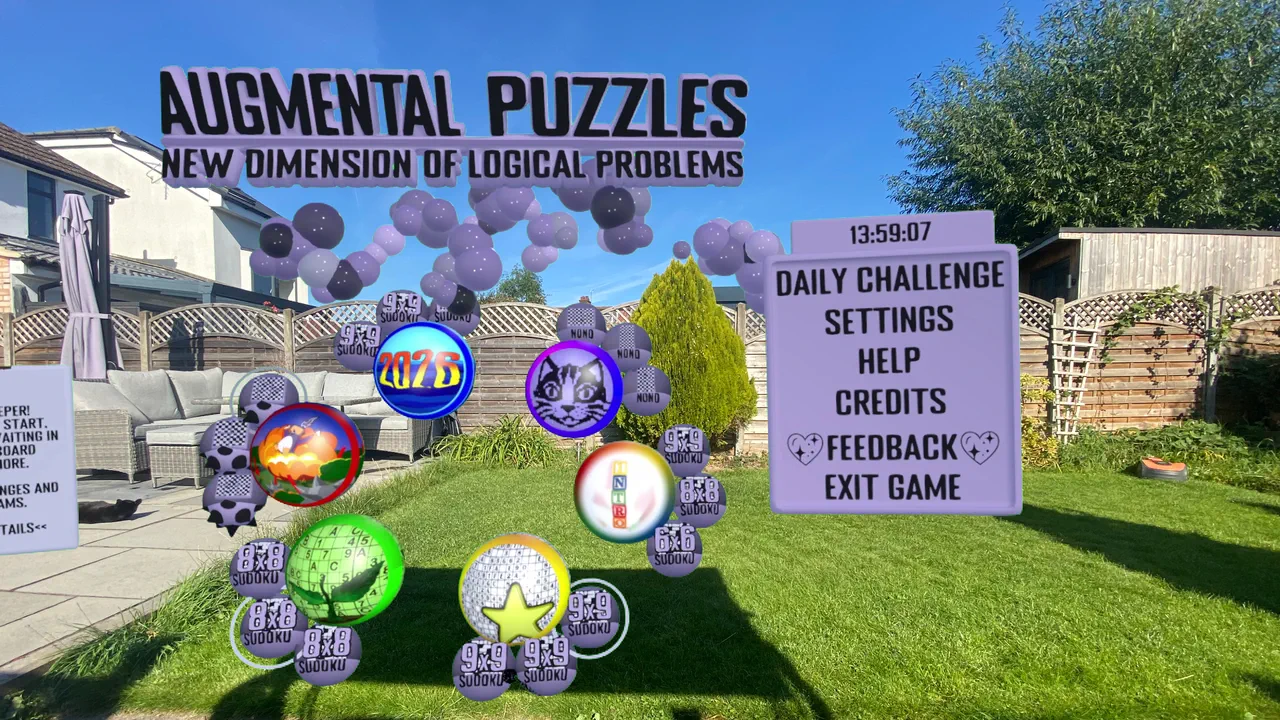
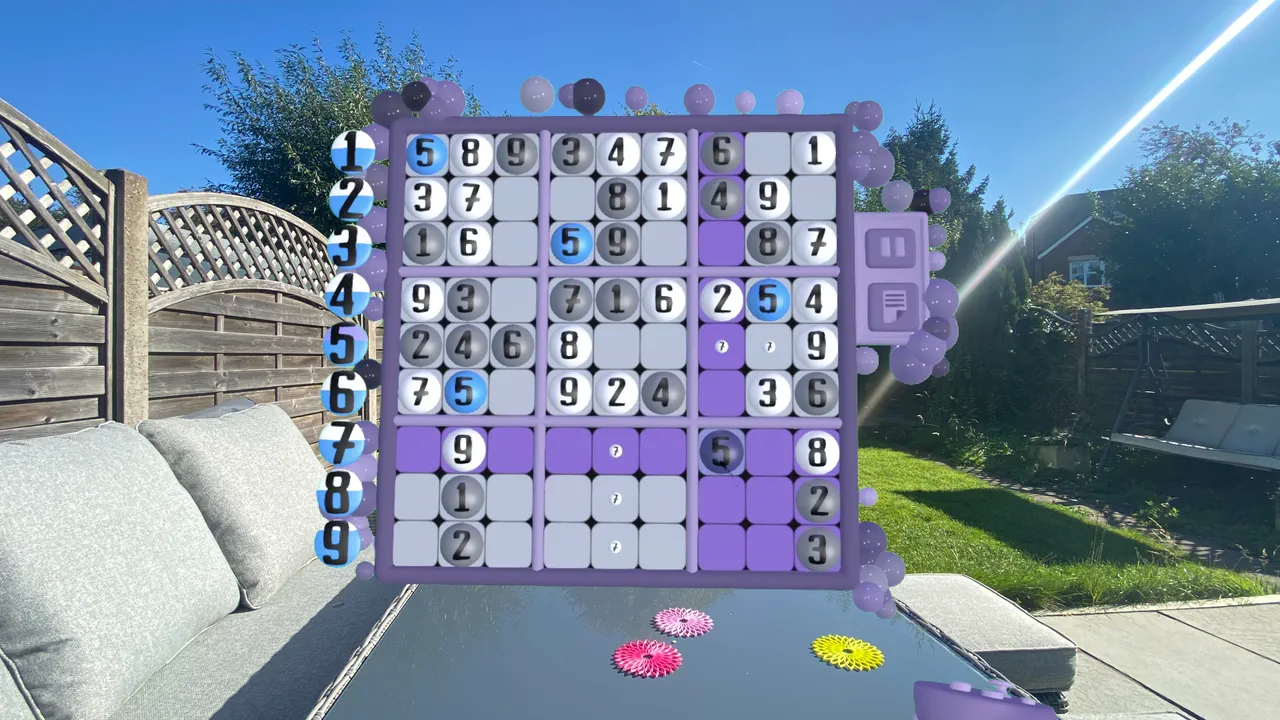
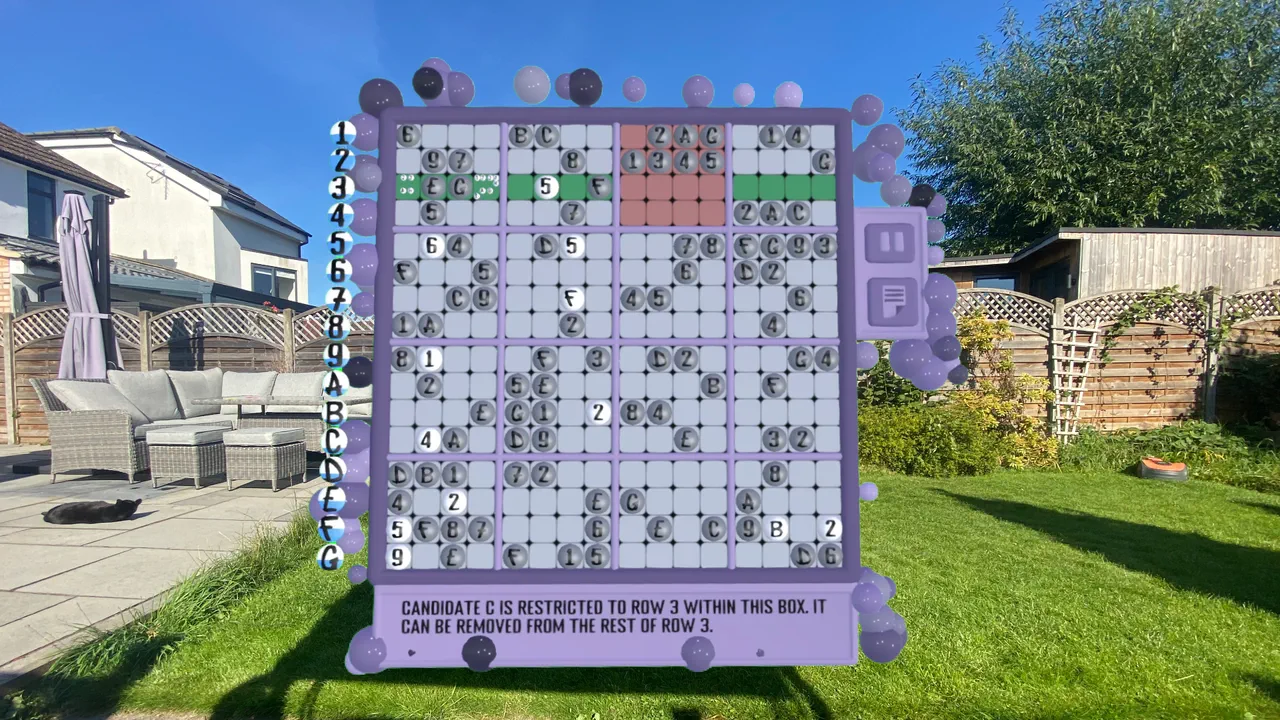
Screenshots below are unedited in-headset captures from the September 2026 Minesweeper Update build, shot in passthrough: the room behind each board is the player's real room. The download bundles them at full resolution alongside the logo and key art. All assets are free to use in coverage of the game.
Download Press Kit
The Journey Ahead
We took a “ship it and prove it” approach: it's hard to sell people on Sudoku in VR until they're inside it and feel how comfortable it is. So our roadmap is about earning your time with a steady drumbeat of updates. Without getting ahead of ourselves:
- More modes. Nonograms and Minesweeper are the first of many. We'll keep adding classic logic puzzles, and some VR-native experiments, with modes voted on in-game.
- More platforms. We're committed to PlayStation VR2, and we want to bring Augmental Puzzles to as much XR hardware as a small team reasonably can.
- The 1.0 north star. A deep catalogue of comfortable puzzle modes, plus our headline feature: cross-platform multiplayer. Solve together, wherever you play.
Disclaimer: we love sharing where we're headed, but until a feature ships it can always change or be delayed.
Proudly powered by the Godot Engine for a native,
high-performance VR experience.
Begin the Challenge TODAY
Our Studio
Flammable Penguins Games
A queer-led, independent XR studio in London, combining AAA engineering with narrative and gameplay craft. We're self-funded and build technically robust, narratively rich games, shipping in the open and backing our titles with frequent updates.
Co-founder and Technical Director Claire Blackshaw has shipped games since the PlayStation 2 era, with over a decade in VR. She served on PlayStation's internal design-review teams through the PS5 and PSVR2 hardware cycles and as a Senior Online Consultant for PlayStation Europe, worked at Media Molecule on Dreams, and wrote the OpenXR implementation for Adobe's Substance Modeler. She holds several software patents and was recognised in Kelly Vero's book Breaking Through Bytes: Women Shaping the Digital World.
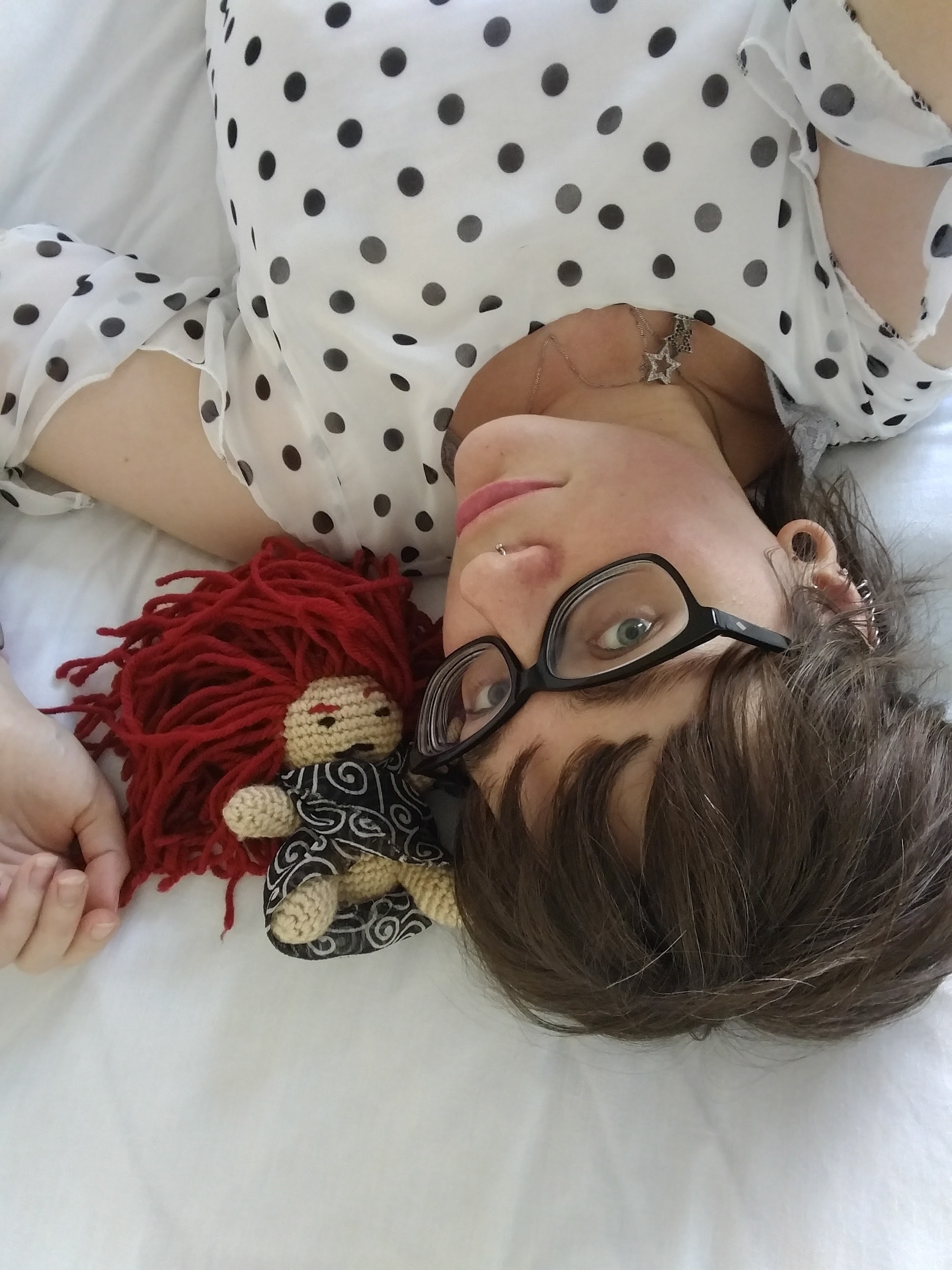
Co-founder and Narrative Director Daphne D'Haenens drives creative vision, with an MA in Creative Writing from Queen Mary and a background in localisation. The two are supported by a network of veteran console developers.
 Claire Blackshaw
Technical Director
Claire Blackshaw
Technical Director
 Daphne D'Haenens
Narrative Director
Daphne D'Haenens
Narrative Director